
Ozone Test Chamber: In a highly competitive manufacturing environment, product quality and longevity are simply not an option. One of the most important — and frequently ignored — factors in quality assurance is assessing how materials react over time to exposure to ozone. This is where ozone test chambers play a supporting role as laboratory testing equipment. Whether you manufacture rubber or automotive, pharmaceutical, or plastic product components, knowing how your materials are affected by ozone can mean the difference between a win and a loss in the field. In this article, we will discuss all there is to know about the ozone test chamber, including its working principle, industries it is used in, benefits, as well as why Effective Lab India has earned the name of india’s best ozone test chamber manufacturer and Salt Spray Chamber manufacturer.
What is an ozone test chamber?
Ozone Test Chamber: In a regulated environment, an ozone test chamber is a precision laboratory instrument to expose the material (mostly rubber, plastics, elastomers, and coated surfaces) to a controlled concentration of ozone gas. This chamber’s main role is to mimic, and speed up, the degradation that ozone has in real life, so manufacturers can test for a material’s ozone resistance in a fraction of the time it would take for just environmental exposure.
Ozone (O₃) is a natural gas in the Earth’s atmosphere. Although it exists in very low concentrations at ground level, even these limited amounts can cause serious deterioration of a limited range of materials — especially rubber — over time. Ozone attack results in surface cracking, hardening, and structural failure of rubber parts such as tires, seals, gaskets, hoses, and belts.
The ozone aging test chamber simulates these atmospheric ozone conditions at high concentrations to facilitate accelerated aging tests that can predict product life and performance without waiting years for natural degradation to occur. The chamber maintains strict control over ozone concentration (in parts per hundred million or pphm), temperature, humidity, and specimen exposure time — according to international testing standards including ISO 1431-1, ASTM D1149, and DIN 53509. It is an essential task, and that is why ozone testing for modern industries is crucial.
Many manufacturers underestimate the level of damage ozone can do to their products until they start experiencing expensive field failures. Ozone cracking is a particularly insidious form of degradation — it starts at the molecular level and typically is not visible to the naked eye until large chunks are affected. This allows you to detect vulnerabilities in the materials at every stage, long before products make it to the end user, by utilizing ozone test chamber testing as part of your quality assurance process.
In essence, these are the fundamental reasons why ozone testing is essential across all modern industries:
Ozone testing allows manufacturers to predict the longevity of a material or product in real-world atmospheric conditions. This data point is essential for developing products with both accurate warranty periods and life expectancy assumptions. Overcoming Safety and Compliance Challenges: In industries such as automotive or aerospace, rubber seals, hoses, and gaskets are critical components for safety. Premature ozone-related failure could cause fluid leaks, pressure loss, or even catastrophic component failure. Ozone chamber testing is routinely performed to verify that such components comply with safe material requirements and regulatory standards before being introduced to the market.
Lowering recall and failure costs: Identifying material weaknesses at an early stage in the development cycle is considerably less expensive than managing product recalls, warranty claims, or liability matters arising from any field failures. Ozone testing is a relatively inexpensive investment in long-term financial peace of mind.
Enhancing Product Design — Data from ozone tests directly guide material selection and formulation decisions. It can allow manufacturers to weigh different rubber compounds, antiozonant treatments, and protective coatings against each other to elucidate what the best-performing materials are for their application.
Alignment with international quality standards is often a prerequisite for supply agreements. This is particularly true in global markets and when dealing with OEM customers. Manufacturers with their own certified ozone test chambers gain a significant advantage. They can generate the necessary reports swiftly and at a lower cost.
How Does an Ozone Test Chamber Work?
Knowing the working principle of the ozone aging test chamber enables operators to use it properly and understand their results correctly. Below is a step-by-step explanation of how an ozone test chamber usually works:
- Ozone Generation
The chamber utilizes an integrated UV lamp or corona discharge generator that generates ozone at exact, programmable concentrations—typically between 25 pphm to 200 pphm and beyond as needed, depending on test standard and application requirements. An internal sensor and control system continually monitor and maintains the ozone concentration during the course of a test. - Temperature and Humidity Control
In most modern test ozone chambers, it is possible to independently regulate temperature and relative humidity. The result also depends on temperature and humidity before conducting the test, that you’ll be good when you were related to It was achieved between 20°C and 70 °C. Therefore, those variables have a control because both temperature and humidity can greatly influence the rate of ozone-induced degradation as well as the pattern. - Specimen Preparation and Placement
Specimens may be subjected to static strain (a constant elongation) or dynamic strain (cycled stretching), depending on the test standard. - Test Exposure and Duration
The duration of exposure depends on the standard and application — anything from as short as 24 hours for screening tests to several hundred hours for comprehensive durability assessments. During this period, the chamber is stationary and maintains stable ozone concentration, temperature, and airflow (no operator intervention required). - Inspection and Result Evaluation
After determining the required exposure time, specimens are carefully removed and inspected visually — frequently under magnification — for ozone damage such as surface cracks, crazing, blistering, or discolouration. Results are assessed against the applicable standard with acceptance criteria defined by either product specification or customer requirement (as appropriate) and documented.
Ozone Test Chambers: What Industries Require Them
Ozone test chamber is a versatile laboratory testing instrument, in manufacturing spanning most sectors. Ozone testing is a significant part of quality and safety programs in the following industries:
- Elastic polymer materials in vehicles: Rubber seals, O-rings, and weather stripping, window gaskets, coolant hoses, and tyre sidewalls can all crack with exposure to ozone. In the automotive industry, all of these components go through extensive ozone testing to guarantee they satisfy OEM durability and safety requirements for the duration of the vehicle’s service life.
- Rubber and Elastomer Manufacturing- The gaskets, drive belts, conveyor belts, and industrial seals rely on ozone resistance when used outdoors or in an industrial environment. Manufacturers providing these products for international markets must perform ozone chamber testing as a critical quality step.
- Pharma and Medical Devices: From rubber closures to syringe plungers, IV tubing, and medical device seals must maintain their integrity for the entirety of their shelf-life and in-use timeline. It is verified through ozone testing that these components will not degrade and negatively impact product sterility or patient safety. Cable and Wire Industry: Ozone attack resistance is needed for the insulation and sheathing of electrical cables — especially those of outdoor installations. Long term safety for electrical and mechanical integrity can be achieved through testing.
- Footwear and Sporting Goods: The rubber soles, foam components, and elastic straps in shoes and sporting goods are tested for ozone resistance to ensure they will withstand outdoor conditions.
Standards That Matter for Ozone Test Chamber Testing
Many internationally recognized tests influence the scope and specification of ozone resistance, including the definition of test conditions, specimen preparation, concentration levels, and evaluation criteria for results. A top-level ozone test chamber is designed & calibrated to meet all of the undermentioned key specifications:
- ISO 1431-1 — Rubber, vulcanized or thermoplastic — Resistance to ozone cracking
- ASTM D1149 — Standard Test Methods for Rubber Deterioration — Cracking in a Controlled Ozone Environment
- DIN 53509 — Testing of rubber; determination of resistance to ozone cracking
- Types of Test: BS 903 Part A43 — Determination of ozone resistance (in the laboratory)
- JIS K 6259 — Rubber — Test methods for ozone resistance
Compliance with these standards is not optional for manufacturers operating in the global market; it is a prerequisite. It means your test data will be accepted by customers, regulators, and certification bodies around the world.
Effective Lab India: Best Ozone Test Chamber and Salt Spray Chamber
Because when you are looking for an ozone test chamber manufacturer in India, then Effective Lab India is a class apart from the rest. Effective Lab India, with years of experience in the design and manufacture of precision laboratory testing instruments, has earned an excellent reputation with all quality professionals; R & D laboratories; Production facilities for almost all automotive, rubber, pharmaceutical, and electronics industries.
Effective Lab India specializes in ozone test chambers, whose design is intended to provide accurate and reproducible testing results, in complete accordance with ISO 1431-1, ASTM D1149, and all other most common international ozone testing standards.
Each chamber is equipped with state-of-the-art microprocessor-based controllers that enable independent, precise adjustment of ozone concentration, temperature, humidity, and test duration — allowing operators full control of every parameter for each test from a single user-friendly interface.
Their Salt Spray Chambers are designed for both standard Neutral Salt Spray (NSS), Acetic Acid Salt Spray (ACSS), and CASS, making them the trusted choice among manufacturers trying to achieve accurate, reliable corrosion testing in their automotive, electroplating, aerospace, and hardware customers.
Thus, if you are a laboratory or quality department that is in search of a trusted, experienced, and ISO compliant ozone test chamber Manufacturer in India, as well as Salt Spray Chamber Manufacturer in India, then Effective Lab India arises as your primary choice.
Important Features of a Quality Ozone Test Chamber
Ozone test chambers are not all created equal. To help you choose the right ozone test chambers for your lab, pay special attention to the following features to maximize accurate results and reduce downtime with your chamber:
Accurate Control of Ozone Concentration: Ozone concentration within the chamber must be controlled to tight tolerances over the course of the test. Opt for chambers with closed-loop ozone sensors and auto-compensation systems. Programmable and precise independent control of temperature and humidity, with +/−1°C for temperature parameter, +/−5 percent RH for humidity balance.
Uniform Airflow Distribution: Proper airflow design makes sure that ozone concentration is the same throughout the entire test zone, avoiding hot spots or concentration gradients that would affect the accuracy.Corrosive Resistant Body Construction: Ozone is a strong oxidizing agent, so when building an ozone generator, all inner surfaces must be from ozoneresistant material (for example, stainless steel or special coating). Digital Data Logging with PC Connectivity: The modern chamber should have technological advancements like digital data logging and provide PC connectivity, allowing the user to manage test records for compliance documentation.
Ensure compliance with international standards: As stated before, make sure that the chamber is designed and certified to comply with ISO 1431-1, ASTM D1149, or other relevant standards for your specific application. For Minimized Operational Downtime, Go For Trusted After-Sales Support: Opt for a manufacturer who provides calibration services, spare parts availability, and responsive technical support.
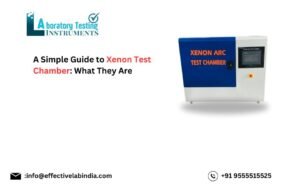
Suggested Post: A Simple Guide to Xenon Test Chamber: What They Are
Conclusion
It is not solely a piece of laboratory equipment; the ozone chamber test is a strategic investment in product quality, customer safety, and long-term business success. By systematically evaluating ozone resistance across your material and product range, you are empowered to design to the standard, honor international quality standards, and ultimately prevent field failures while reinforcing a reputation for products that last.
If you are going to establish a new quality test laboratory or enhance an existing ozone aging testing environment, the selection of an ozone test chamber manufacturer is crucial. Innovative Lab India represents the best engineering, experienced manufacturing process quality, auto mechanism against global standards, with exceptional customer support, and no one does ozone test chamber and Salt Spray Chamber in India or worldwide like them. Reach out to Effective Lab India now and find the right solution for testing in your industrial niche!
For more Information, please contact.
Contact:
Email:
LinkedIn: Laboratory Testing Instruments